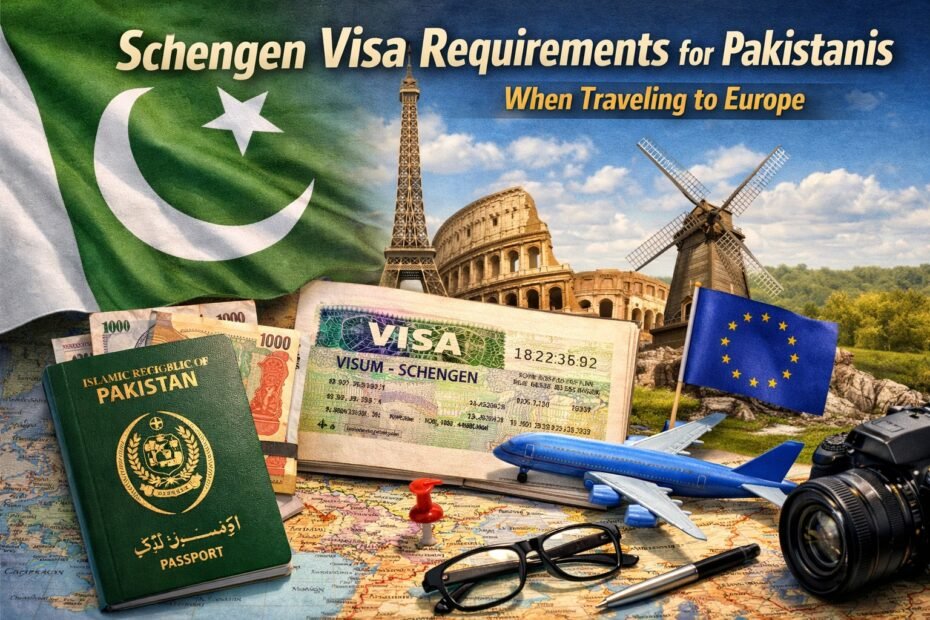
Europe is one of the most beautiful places in the world. Many Pakistanis dream of visiting countries like France, Italy, Switzerland and Germany. But before you book your ticket, you need to understand one important thing. That thing is the Schengen Visa.
A Schengen Visa allows you to travel across 27 European countries using just one visa. You do not need a separate visa for each country. This makes travel in Europe very convenient. But getting this visa requires some preparation and the right documents.
In this guide we will explain everything step by step so that even a first time applicant from Pakistan can understand the full process easily.
What Is a Schengen Visa
The Schengen Area is a group of 27 European countries that have agreed to allow free movement across their borders. When you have a Schengen Visa you can enter any of these countries without needing separate visas for each one.
Popular Schengen countries that Pakistanis love to visit include France, Germany, Italy, Spain, Switzerland, Netherlands, Austria, Belgium, Greece and Portugal. So if you want to visit the Eiffel Tower in Paris and then drive to Switzerland to see the Alps you can do that with just one visa.
Skardu.pk has a great article on the 5 Best Places to Visit in Switzerland which can help you plan your Swiss itinerary once your visa is approved.
Do Pakistanis Need a Schengen Visa
Yes. Pakistani passport holders need a Schengen Visa to enter any country in the Schengen zone. Pakistan is not part of any visa free agreement with Schengen countries so you must apply for the visa before you travel.
The visa application is submitted to the embassy of the country you plan to visit first or the country where you will spend the most time. For example if your first stop is France you apply at the French embassy in Pakistan.
Types of Schengen Visa for Pakistanis
Tourist Visa (Type C): This is the most common type. It allows you to stay in the Schengen zone for up to 90 days within a 180 day period. This is what most Pakistani travelers apply for when visiting Europe for tourism.
Transit Visa: If you are passing through a Schengen country on your way to another destination you may need a transit visa. This depends on your nationality and the specific country you are transiting through.
Multiple Entry Visa: If you plan to visit Europe more than once in a year a multiple entry visa lets you enter and exit the Schengen zone multiple times within the visa validity period.
Required Documents for Schengen Visa from Pakistan
This is the most important section. If your documents are not complete your visa will be rejected. Here is what you need to prepare.
1. Valid Pakistani Passport — Your passport must be valid for at least 3 months beyond your planned return date. It should also have at least 2 blank pages.
2. Completed Visa Application Form — Fill out the official Schengen visa form carefully. Any mistakes can cause delays or rejection.
3. Recent Passport Size Photographs — Usually 2 recent photos with white background following the Schengen photo specifications.
4. Flight Itinerary — Proof of your planned travel including arrival and departure flights. You do not need to buy tickets before your visa is approved but you need a booking confirmation.
5. Hotel Bookings or Accommodation Proof — This can be a hotel reservation or a letter from a host if you are staying with someone.
6. Bank Statements — Usually the last 3 to 6 months of your bank statements showing you have enough funds to support yourself during the trip.
7. Employment Letter or Proof of Income — If you are employed then a letter from your employer confirming your job, salary and approved leave is needed.
8. Travel Insurance — This is mandatory. Your insurance must cover the entire duration of your stay with a minimum coverage of 30,000 Euros.
9. CNIC Copy — A clear copy of your national identity card.
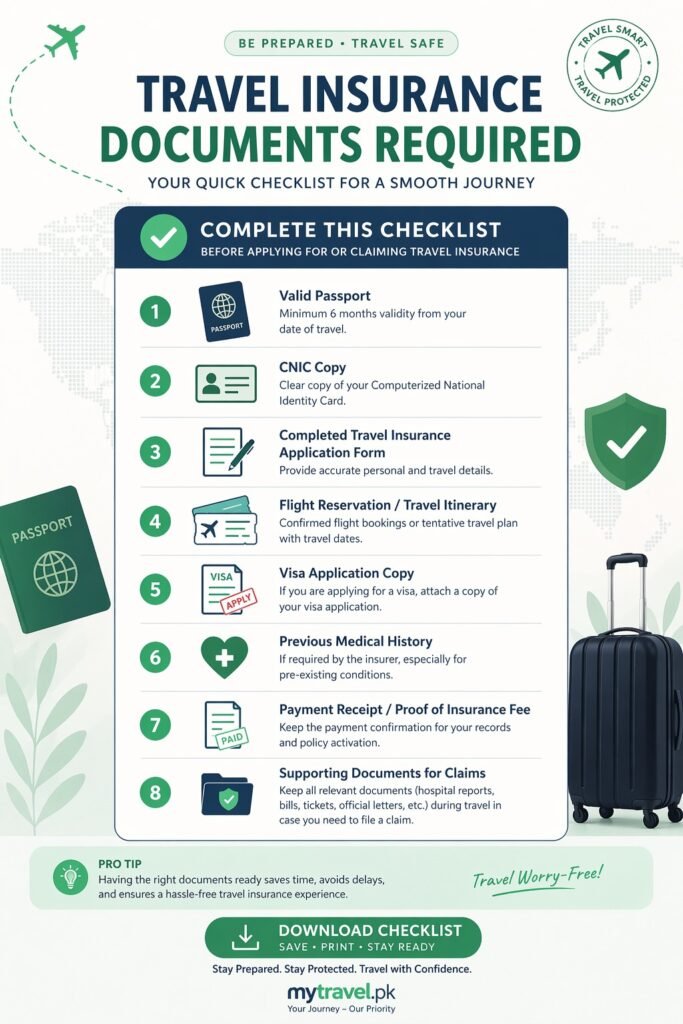
Travel Insurance Is Mandatory for Schengen Visa
Many Pakistani applicants forget about travel insurance or do not take it seriously. This is a big mistake. Travel insurance is not optional for a Schengen Visa. It is a mandatory document and without it your application will be rejected.
Your travel insurance must cover medical emergencies, hospital expenses and emergency repatriation back to Pakistan. The minimum coverage required is 30,000 Euros and it must be valid for all Schengen countries for the full duration of your trip.
Medical treatment in Europe is very expensive. A single hospital visit can cost thousands of Euros. Having proper Schengen travel insurance protects you from these costs and is also a visa requirement at the same time. You can book an approved policy quickly online through authorized platforms in Pakistan.
How Much Money Do You Need to Show
The Schengen embassies want to see that you can support yourself financially during your stay. Different embassies have slightly different requirements but as a general guide you should be able to show around 50 to 100 Euros per day of your stay.
So if you plan to stay for 14 days you should ideally show funds of around 700 to 1400 Euros in your bank account. Having a good salary, stable job and a clean bank statement with regular income will strengthen your application significantly.
Where to Apply for Schengen Visa in Pakistan
You can apply for a Schengen Visa in Pakistan through the embassies or their authorized visa application centers. The main Schengen embassies operating in Pakistan are located in Islamabad. Some also have application centers in Karachi and Lahore through visa service companies like VFS Global.
If you are planning a Europe trip and also want to explore some amazing travel destinations at home first, do check out Skardu.pk’s travel guide on the best places to visit in Hunza Valley. It is a great way to start your travel journey closer to home before heading to Europe.
How Long Does the Schengen Visa Take
The standard processing time for a Schengen Visa is 15 calendar days from the date your complete application is received. In some cases it can take up to 30 or even 60 days if additional documents are requested. For this reason it is always recommended to apply at least 4 to 6 weeks before your planned travel date.
Do not book non refundable flights or make large payments before your visa is confirmed. Many applicants make this mistake and end up losing money.
Why Schengen Visas Get Rejected for Pakistanis
Visa rejection is a common concern among Pakistani applicants. Here are the most frequent reasons why applications are rejected.
• Incomplete or incorrect documents
• Weak bank statement or insufficient funds
• No travel insurance or insurance that does not meet requirements
• No strong ties to Pakistan such as a job, property or family
• Inconsistent travel history or previous visa violations
• Purpose of visit not clearly explained in the cover letter
The best way to avoid rejection is to prepare a strong and complete application with clear supporting documents. Writing a good cover letter explaining your purpose of visit and strong ties to Pakistan is also very helpful.
Tips to Make Your Schengen Visa Application Stronger
Here are some practical tips that can genuinely help Pakistani applicants get their Schengen Visa approved.
• Apply early. Do not leave it to the last minute.
• Write a clear cover letter explaining why you want to visit Europe and why you will return to Pakistan.
• Show previous travel history if you have any. Stamps from other countries help build your credibility.
• Keep your bank balance consistent. Sudden large deposits look suspicious.
• Book refundable hotels and flights during the application process.
• Get your travel insurance sorted before submitting the application.
For Pakistanis who travel frequently, investing in a comprehensive travel insurance plan that covers multiple countries and trips is a smart idea. It saves both time and money in the long run while keeping you protected wherever you go.
Best Places in Europe for Pakistani Tourists
Once your visa is approved the real fun begins. Europe has so much to offer. Here are some destinations that Pakistani tourists absolutely love.
Paris, France: The Eiffel Tower, the Louvre Museum and incredible food make Paris a dream destination for many Pakistanis.
Switzerland: From Zurich to Zermatt and Lucerne, Switzerland is stunningly beautiful and surprisingly accessible once you have your Schengen Visa. You can also read more about the best places to visit in Switzerland here on Skardu.pk.
Italy: Rome, Venice and Milan are on the bucket list of almost every traveler. The history, food and culture of Italy are truly world class.
Netherlands: Amsterdam is one of the most unique cities in the world. The canals, the tulip fields and the museums make it a wonderful place to visit.
Greece: The beaches, the ancient history and the food make Greece a perfect warm weather destination. Santorini is a place that leaves every visitor speechless.
If you love mountains and natural beauty the way Pakistanis do when they visit places like Hunza or Skardu you will especially love countries like Switzerland, Austria and Norway. Europe has scenery that will remind you of home but with a completely different experience.
Skardu.pk also has an excellent read on the 6 Best Travel Destinations in the Mediterranean which is perfect reading for anyone planning a southern Europe trip.
Final Thoughts
Getting a Schengen Visa from Pakistan is absolutely possible. Thousands of Pakistanis get this visa every year and travel to Europe without any issues. The key is proper preparation and making sure your documents are complete and convincing.
Start with a good travel plan, book your accommodation, get your bank statement in order, write a strong cover letter and most importantly do not forget your travel insurance. These steps alone will put your application in a much stronger position than most.
Europe is waiting for you. With the right preparation and a little patience you will be walking through the streets of Paris or sitting by a lake in Switzerland sooner than you think.