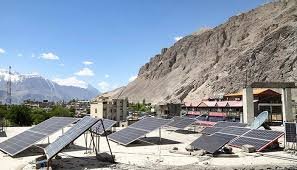
Skardu (Shakoor Abdullah) — Residents of Skardu district in Gilgit‑Baltistan have voiced strong objections to the allocation of Pakistan’s Prime Minister’s 100‑megawatt solar park project, calling it an alleged injustice and demanding immediate notice to senior officials. Local representatives and citizens say Gilgit‑Baltistan faces a severe electricity crisis, prompting the federal government to launch a 100 MW solar power initiative. However, the current distribution has drawn sharp criticism. Sources indicate the scheme allocates 58 MW to Gilgit, 8 MW to Chilas, only 6 MW to Skardu, and 10 MW to Ghanche. Skardu’s public deems this unfair, noting the district suffers the greatest power shortage yet receives the smallest share. They describe the allocation as “salt in the wheat,” arguing it will not solve Skardu’s long‑standing electricity problems. Residents say Skardu should receive at least 40 MW to curb load‑shedding and the ongoing crisis. They also condemn the silence of local administration, the electricity department, and relevant political and bureaucratic circles as incomprehensible. The Commissioner of Gilgit‑Baltistan and other responsible officials are urged to take notice and ensure a fair distribution. Protesters warned that if the perceived injustice toward Skardu is not corrected, the public will be forced to demonstrate. Citizens demand an immediate re‑allocation of the solar project so that all districts receive electricity on an equal basis.
Related posts:
Daimar Tree‑Planting Campaign Accelerates Against Climate Change, Thousands of Saplings Pl...
Government Employees Warned to Stay Away from Politics or Risk Losing Jobs (DC)
Karakoram International University’s KGS Announces 27 MS and PhD Programs
This Place in Skardu is A New Dream Destination For Tourists As It is Similar to Trolltung...
Gops Protest Over Dilapidated Roads, Dangerous Bridges and Traffic Hazards
The evolution of the Web 1.0, 2.0 and 3.0
Skardu.pk is one of the leading authentic news and information platform focusing on adventure tourism, regional and world affairs.
- Editorial Team
- Editorial Team
- Editorial Team
- Editorial Team
- Editorial Team
- Editorial Team
- Editorial Team
- Editorial Team
- Editorial Team
- Editorial Team
- Editorial Team
- Editorial Team
- Editorial Team
- Editorial Team
- Editorial Team
- Editorial Team
- Editorial Team
- Editorial Team
- Editorial Team
- Editorial Team
- Editorial Team
- Editorial Team
- Editorial Team
- Editorial Team
- Editorial Team
- Editorial Team
- Editorial Team
- Editorial Team
- Editorial Team
- Editorial Team
- Editorial Team
- Editorial Team
- Editorial Team
- Editorial Team
- Editorial Team
- Editorial Team
- Editorial Team
- Editorial Team
- Editorial Team
- Editorial Team
- Editorial Team
- Editorial Team
- Editorial Team
- Editorial Team
- Editorial Team
- Editorial Team
- Editorial Team
- Editorial Team
- Editorial Team
- Editorial Team
- Editorial Team
- Editorial Team
- Editorial Team
- Editorial Team
- Editorial Team
- Editorial Team
- Editorial Team
- Editorial Team
- Editorial Team
- Editorial Team
- Editorial Team
- Editorial Team
- Editorial Team
- Editorial Team
- Editorial Team
- Editorial Team
- Editorial Team
- Editorial Team
- Editorial Team
- Editorial Team
- Editorial Team
- Editorial Team
- Editorial Team
- Editorial Team
- Editorial Team
- Editorial Team
- Editorial Team
- Editorial Team
- Editorial Team
- Editorial Team
- Editorial Team
- Editorial Team
- Editorial Team
- Editorial Team
- Editorial Team
- Editorial Team
- Editorial Team
- Editorial Team
- Editorial Team
- Editorial Team
- Editorial Team
- Editorial Team
- Editorial Team
- Editorial Team
- Editorial Team
- Editorial Team
- Editorial Team
- Editorial Team
- Editorial Team
- Editorial Team
- Editorial Team
- Editorial Team
- Editorial Team
- Editorial Team
- Editorial Team
- Editorial Team
- Editorial Team
- Editorial Team
- Editorial Team
- Editorial Team
- Editorial Team
- Editorial Team
- Editorial Team
- Editorial Team
- Editorial Team
- Editorial Team
- Editorial Team